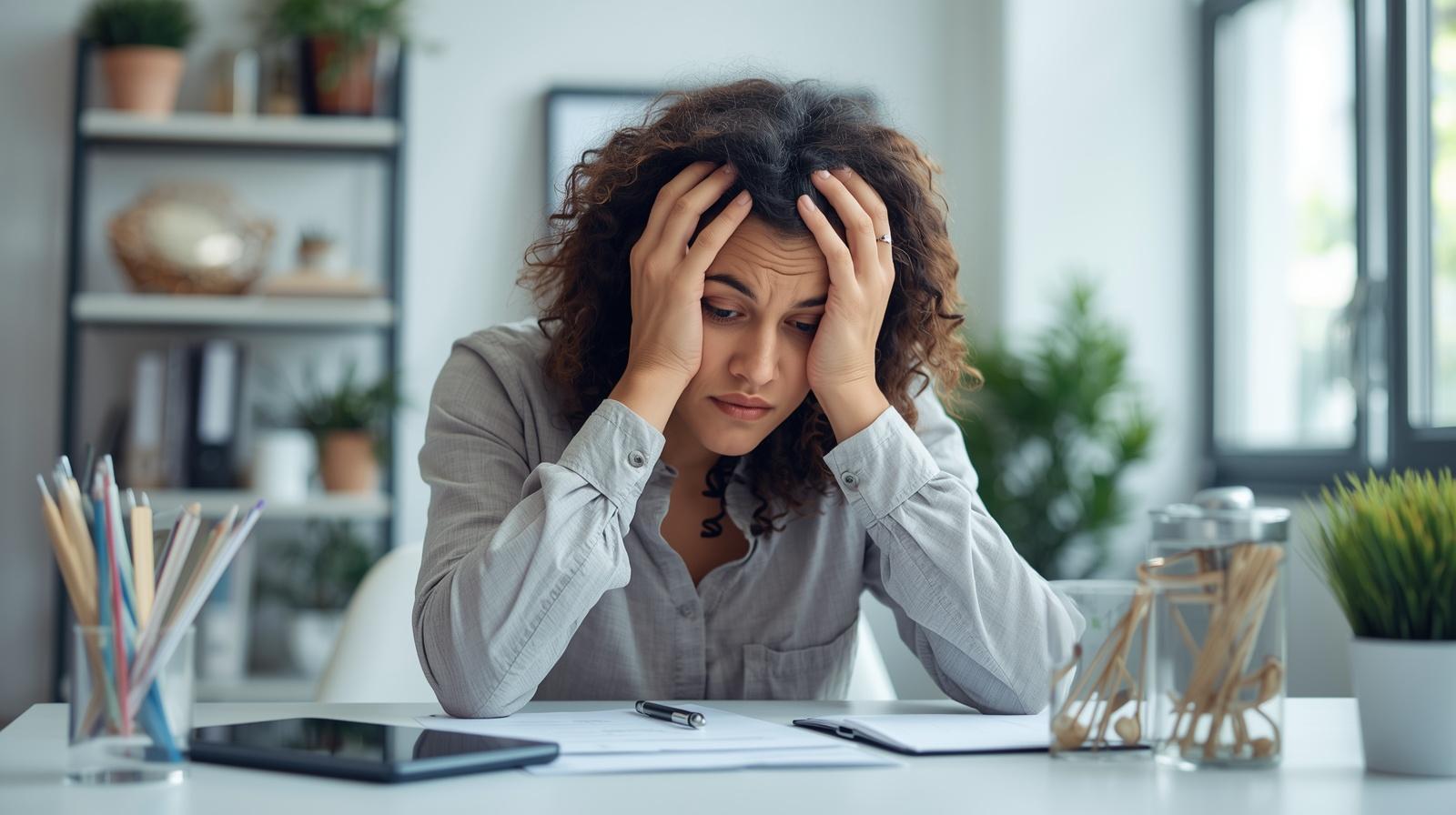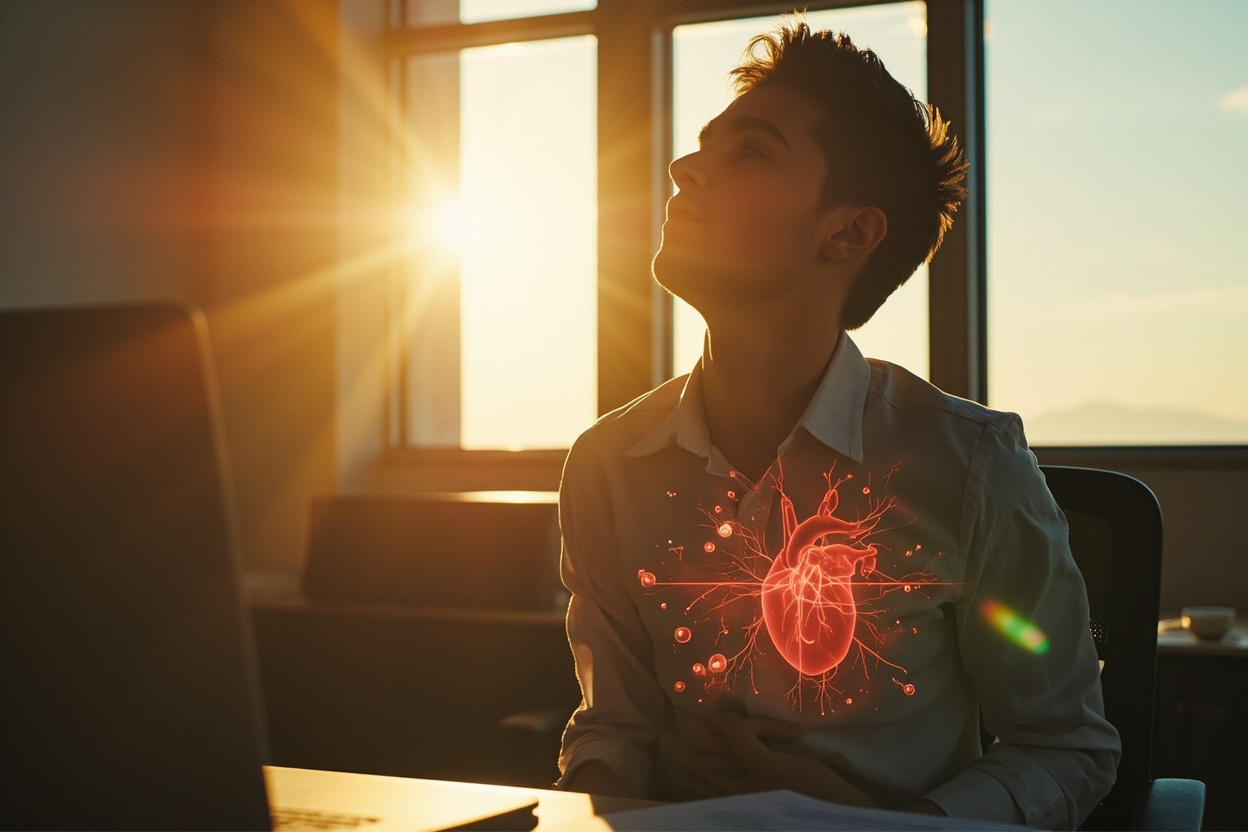
It’s 3pm. You’ve eaten a reasonable lunch. Nothing stressful has happened. And yet — your heart starts racing. There’s a tightness in your chest. A sense that something is terribly wrong.
You tell yourself it’s just stress.
But what if it’s histamine?
This is something that comes up constantly in the community — people who feel anxious for no reason they can identify, who have racing hearts and waves of dread that don’t match their actual day. They’ve often been told it’s anxiety. Sometimes they have medication for it. And the medication helps, but not fully.
The connection worth exploring: histamine is not just the thing that makes your nose itch. It’s also a neurotransmitter. And when it builds up beyond what your body can clear, it does things to your brain that feel exactly like anxiety.
What histamine actually does in your brain
Histamine crosses the blood-brain barrier via H1 receptors. When brain histamine is elevated, it activates the hypothalamus and amygdala — the brain’s threat-detection centres. The result can be a racing heart, a sense of impending doom, difficulty breathing, that specific feeling people describe as “I feel like something bad is about to happen.”
It also interacts directly with cortisol. Elevated histamine signals to your HPA axis — the system that manages your stress response — that there is a threat requiring a cortisol surge. If the histamine signal is chronic, your cortisol stays elevated. And elevated cortisol, sustained over time, produces exactly the symptoms people describe as “I feel anxious for no reason.”
You are not making this up. This is a measurable physiological response, not a character flaw.
Why doctors call it anxiety
Because that’s what it looks like.
The symptoms of histamine-induced anxiety and clinical anxiety disorder are near-identical on a symptom questionnaire. Racing heart — anxiety. Sense of dread — anxiety. Panic feeling — anxiety. Unless your doctor has specifically studied histamine intolerance, the connection is easy to miss.
GPs are trained to recognise anxiety disorders. They are not typically trained to ask: what if the histamine is elevated for a reason? What if there’s a downstream mechanism driving this?
This is why people get diagnosed with anxiety, given medication, and sent away — while the underlying histamine load continues to build. The symptoms persist. The patient feels dismissed. And the word “anxiety” starts to feel like a label that explains nothing.
Why antihistamines don’t fully help
You might have tried antihistamines and found they take the edge off, but not enough.
That’s because most standard antihistamines are H1 blockers. They block histamine at the receptor sites — reducing sneezing, itching, and some anxiety symptoms if histamine is a contributor. They do not address the underlying histamine build-up.
DAO enzymes are what actually clear histamine from your bloodstream. Think of antihistamines as silencing the alarm. DAO supplements as clearing the smoke. If the anxiety is histamine-driven, and the histamine is coming from food, stress, hormones, and environmental triggers — blocking one receptor is part of the solution, not all of it.
The cortisol-histamine loop
This bit does not get talked about enough.
Stress raises cortisol. Elevated cortisol suppresses DAO activity. Less DAO means histamine clears more slowly. More histamine means more anxiety symptoms. More anxiety symptoms mean more perceived stress. More perceived stress means more cortisol.
It’s a loop.
This is why people notice symptoms getting worse during busy periods, when they’re sleeping poorly, or during hormonal fluctuations. The anxiety disorder is not worsening — the cortisol-histamine loop is being triggered more intensely.
If you’ve been told your anxiety is stress-related, that might be true in a different sense than your doctor meant. The stress might literally be raising your histamine through a specific biochemical mechanism.
What you can actually do about it
Test the connection. Try a strict low-histamine diet for 5-7 days. Fresh meats, fresh vegetables, rice, eggs. Avoid aged cheeses, fermented foods, wine, and leftovers. Note whether the 3PM feelings change. If they do, that’s a signal worth following.
Support DAO. DAO supplements taken 20 minutes before meals can help break down histamine in the gut before it enters circulation. They’re not a cure. They’re a tool.
Track your triggers. A simple log — symptoms, meals, sleep quality, stress levels, and cycle position if applicable. Patterns over 2-3 weeks are more useful than any single day’s data.
Address the cortisol loop. Consistent sleep, breathwork, gentle movement — anything that genuinely lowers baseline stress. This is not about willpower. It’s about reducing the cortisol signal that suppresses DAO and raises histamine.
The honest bit
Histamine-induced anxiety is not a diagnosis most GPs will offer. Testing on the NHS is limited. The research is real but still catching up with what people are experiencing.
That does not mean the mechanism is not there. It means the medical system has not caught up yet.
If you’ve been struggling with anxiety symptoms that don’t quite fit the anxiety disorder picture — if you feel worse after certain meals, or during pollen season, or when you’re run down — it’s worth asking the question.
You’re not crazy. You’re not imagining it. And it might be worth looking into.